Caring for Crich Swifts
August 2025
Information taken from an article written by the late John Varty for Crich Area Community News with some additional facts supplied by Derbyshire Swift Conservation.
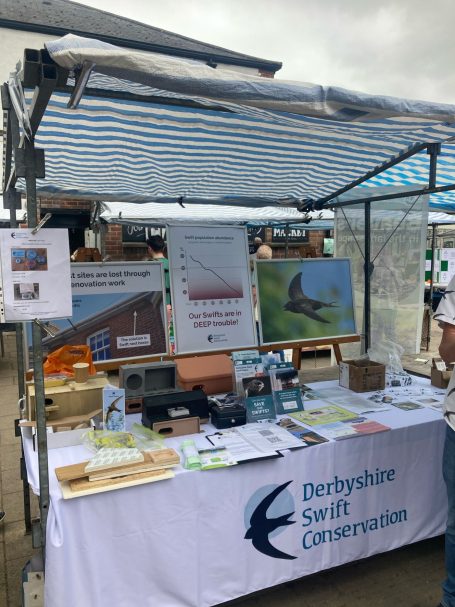
These enchanting and vibrant birds have experienced a decline of over 65% across Derbyshire and the UK in the past 25 years, leading them to be classified as a red-listed species of conservation concern.
This decline is primarily due to the ongoing loss of suitable nesting sites in existing buildings.
You can help address this issue by taking the following steps:
- Protect Swift nest sites: Identify the locations of existing nests and inform Transition Crich members so that we can submit them to the Derbyshire Swift survey.
- Install Swift boxes: Consider adding these to your property.
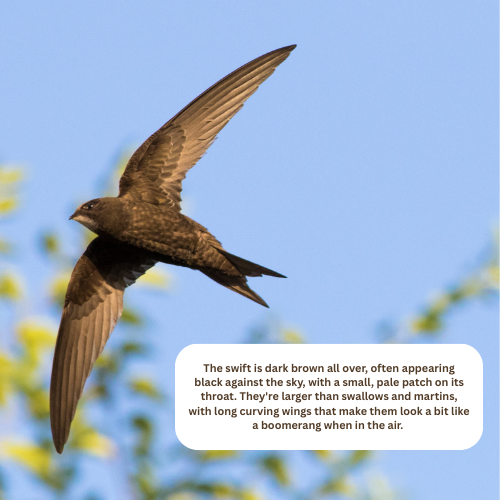
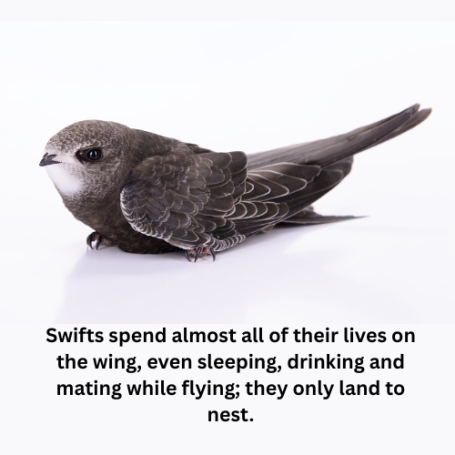
Around the first week of May each year, swifts return to Crich, filling the air with their distinctive screams over the Market Place. These birds are well known for being extremely loyal to their nest sites, returning to the same nest multiple times throughout their 8+ year lifespan.
Swifts are remarkable creatures; their migration between Britain and Equatorial Africa covers a staggering round trip of 14,000 miles and they do this without touching down. In fact the only time parent birds ever land is when they are breeding and have to stay within the nest.
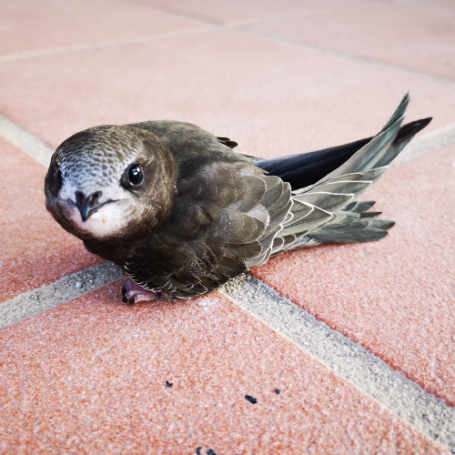
The main reason for this is that swifts never voluntarily land on flat surfaces as their short legs comprise of four forward-facing toes ideally suited to cling to vertical surfaces such as trees and buildings. They eat, drink, preen, and even mate while in flight. To sleep, they soar up to about 10,000 feet and glide down, dozing on autopilot.
To breed, because they are unable to land and collect material to create a mud nest like swallows or martins, they need to find an access hole in a building through which they build a rudimentary nest by gathering airborne feathers, dried grass, hay, leaves, and even bits of paper, gluing them together with saliva.
They mate for life, typically laying 2-3 eggs, and both parents take turns incubating them. Throughout the day, each parent brings in hundreds of insects, formed into a bolus in their crop to feed the chicks.
After 6-8 weeks, the chicks are ready to leave, fledging from mid-July to August or even September. Amazingly these young birds fly alone to Africa, remaining airborne until they are ready to breed, which may not happen until their third year, after which they will have made thde migration ot Africa at least twice. First year birds, returning to the northern hemisphere for the first time do not return to their area of fledging; instead, they are thought to spend the next years identifying new areas, choosing a potential mate and nest site.
To help swifts and other birds, consider planting wildflowers in your garden to attract a variety of pollinating insects they enjoy eating. The best addition to your garden is a pond, no matter how small, because they are great for breeding insects. You really can make a difference.
And remember, please don’t use insecticides!
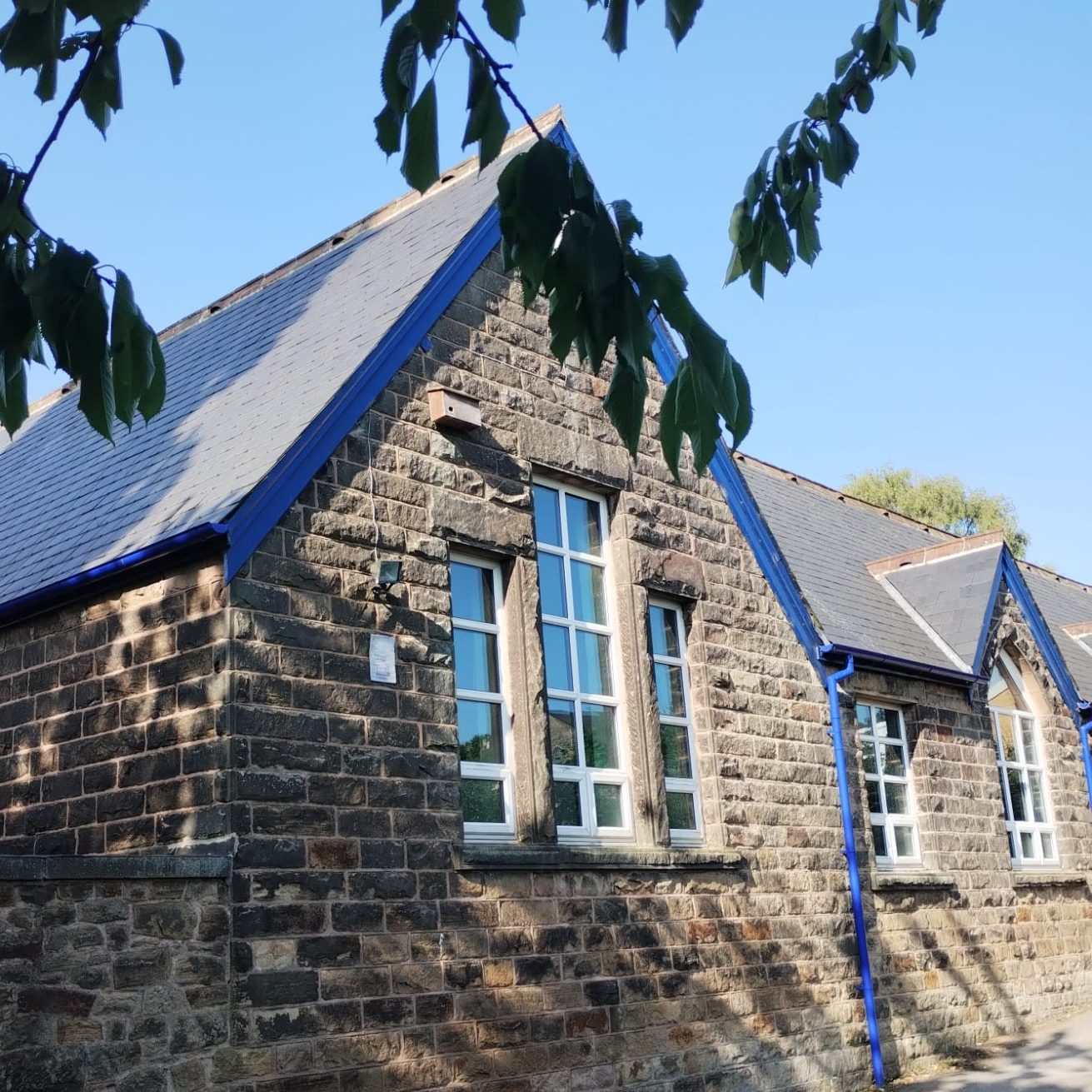
Image: Swift Boxes at Crich Junior School
Crich Swift Conservation Group
Members of Transition Crich are committed to continuing the important work started by the late John Varty.
We are collaborating with Derbyshire Swift Conservation, local residents, businesses and community groups to map current nesting sites and assist in creating and installing nest boxes on homes and other public buildings to establish colonies.
If you have an information about existing sites or would like to participate in Swift Conservation in the Crich area, please contact Jennie at transitioncrich@gmail.com or join Crich Swift Conservation WhatsApp group.
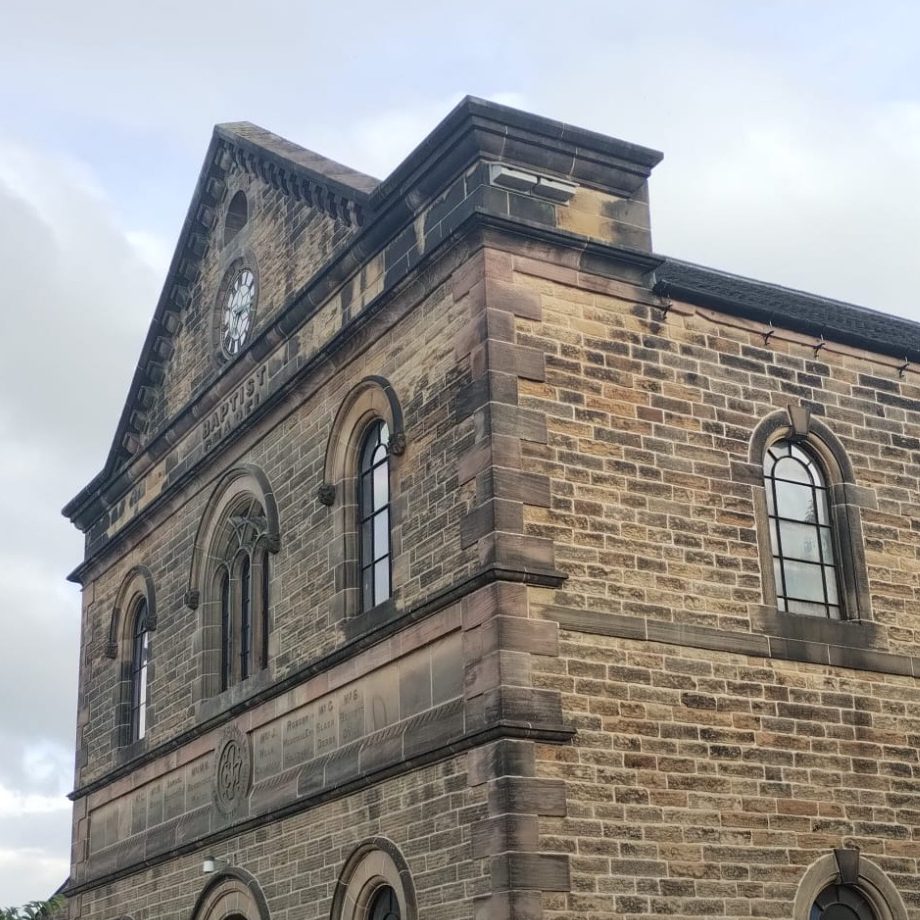
Image: Swift Boxes at Crich Baptist Chapel